%20(1).webp)
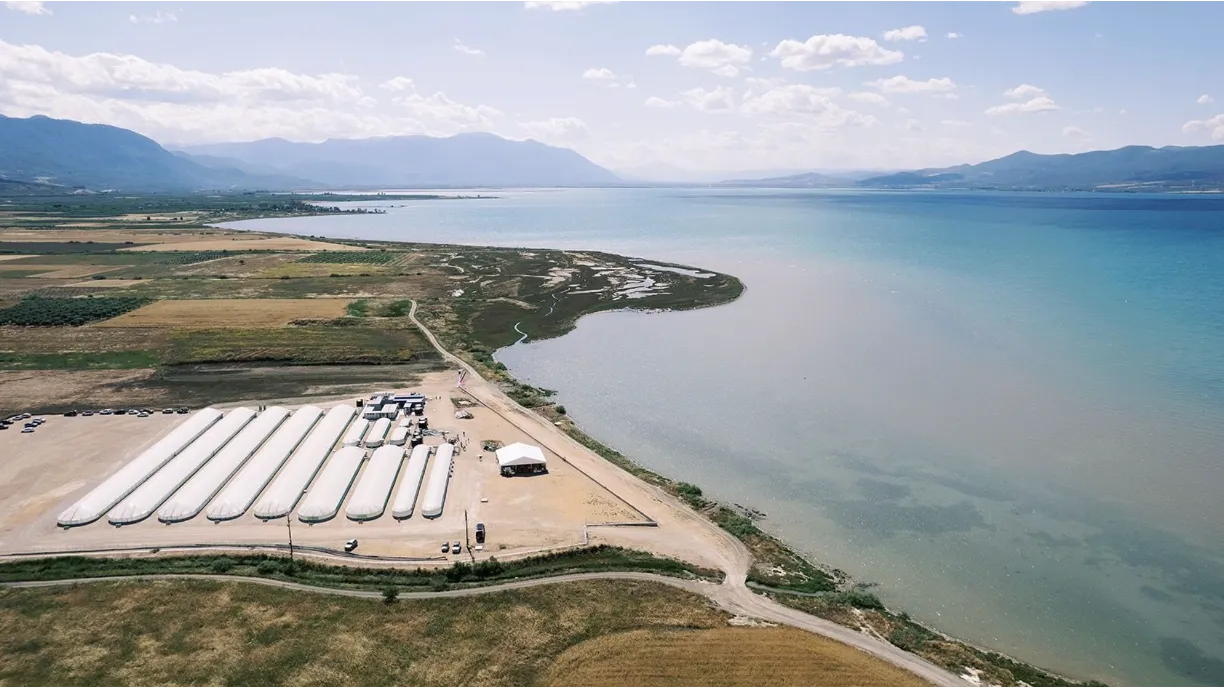
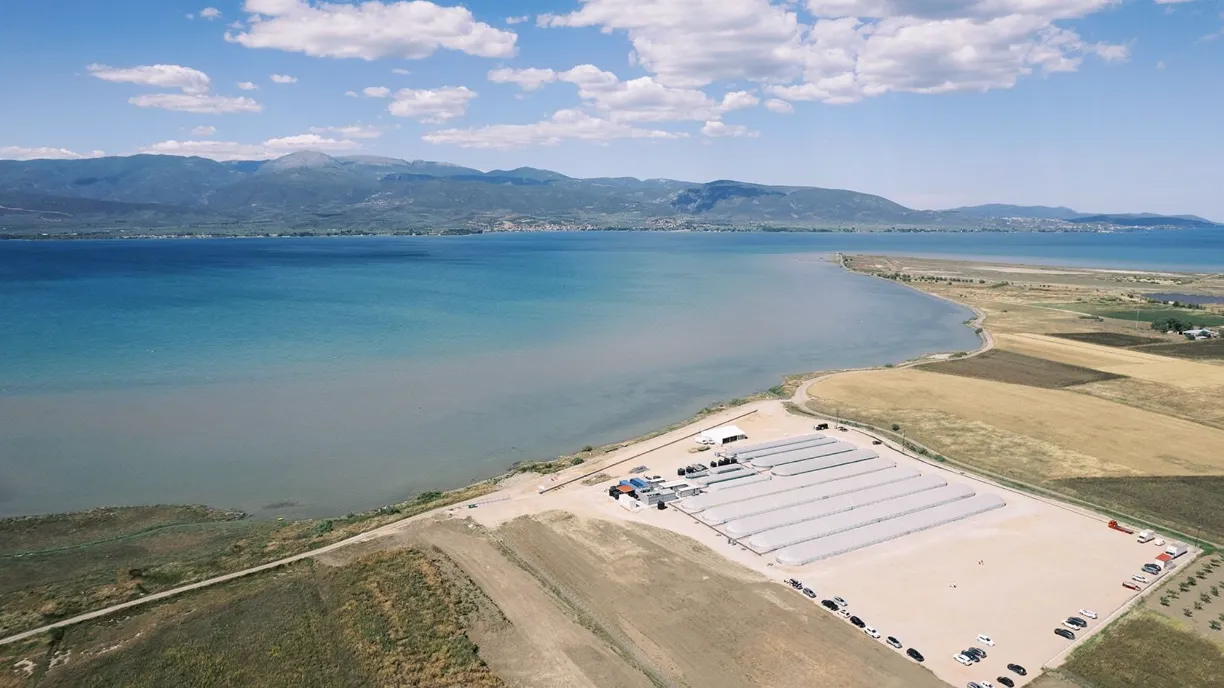
Travel to the Malian Gulf of the Aegean Sea, off the coast of Central Greece, and you’ll see a vista unlike any other. Home to Plankton First’s production facility, it’s a landscape of abundant sunshine, rugged mountain peaks, pristine waters, and migratory birds of every color and size.
Amidst these scenic surroundings, our phytoplankton-rich ponds are easy to miss. Designed to honor the rhythms of the environment, they subtly blend into the landscape itself. Let’s take a closer look at how our nature-led approach leads to a superior finished product that’s nutrient-heavy, with a light footprint.
Step inside our natural laboratory.
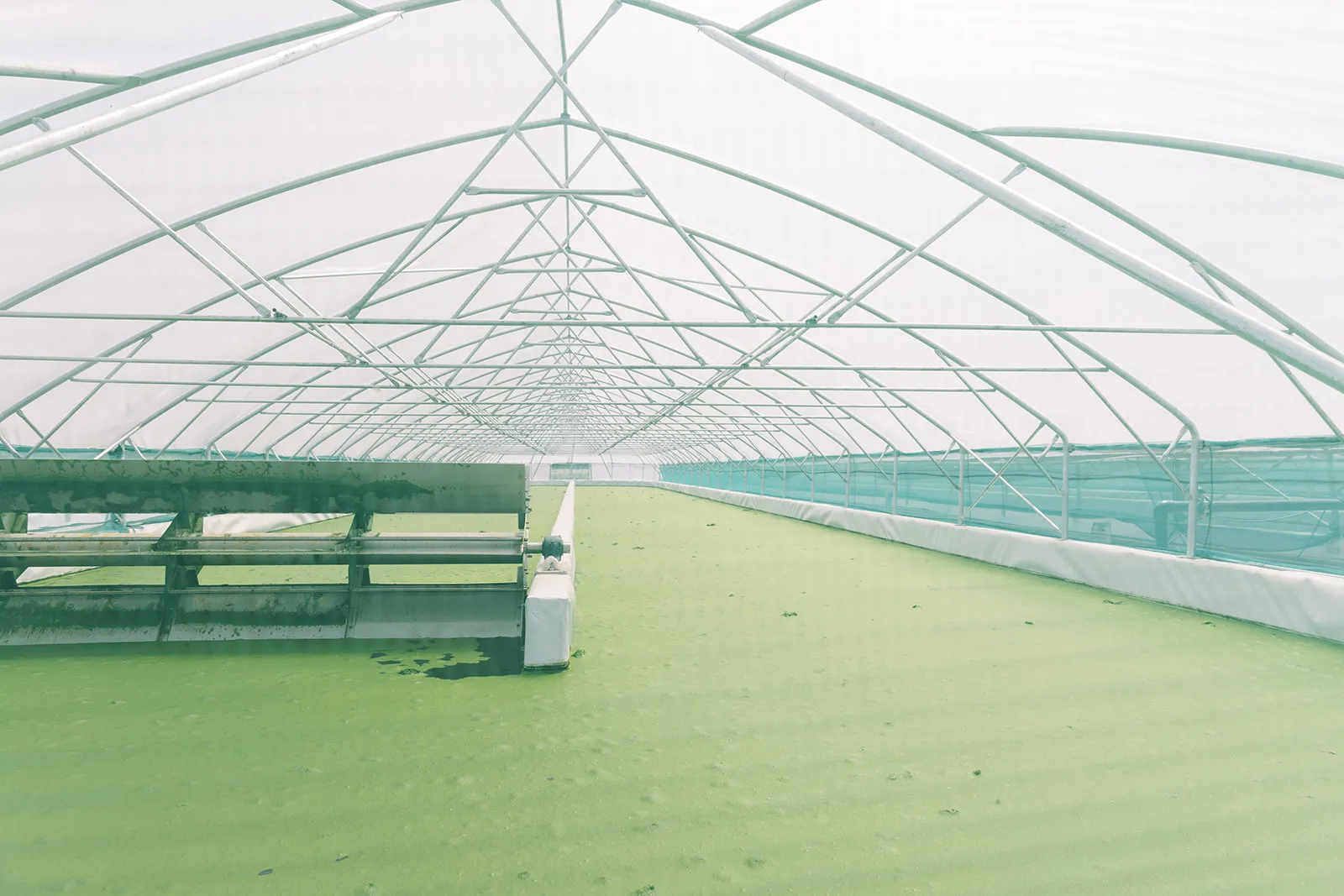
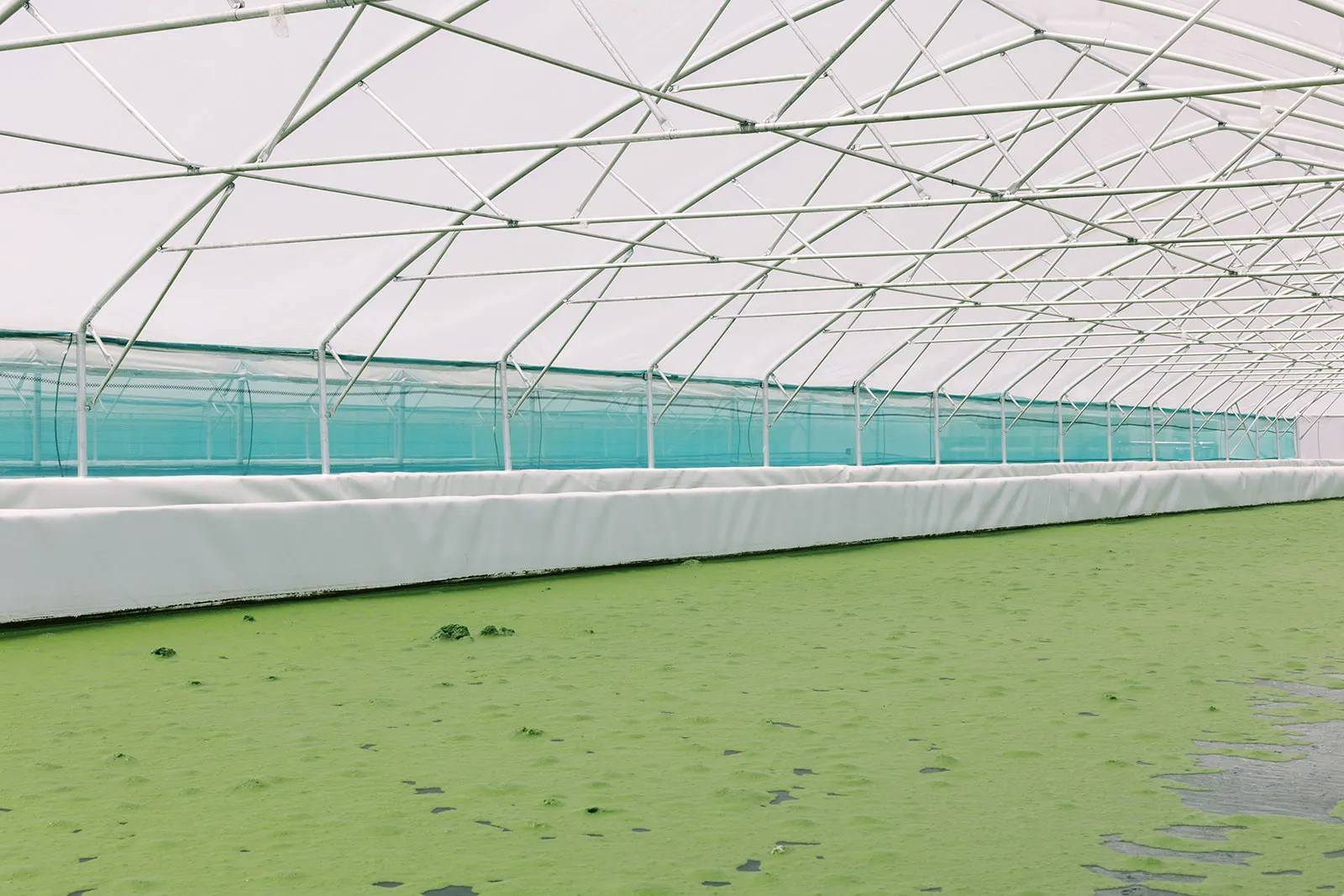
Once you step into one of our production tents, you’ll see indoor ponds with a distinct hue—a deep, inviting green, akin to fresh-cut grass. This color speaks to a high concentration of Nannochloropsis oceanica phytoplankton—organisms that are microscopic on their own, but visible in community.
“Phytoplankton is not something you can actually see. You see only the results of its multiplication,” says Thanos Andreou, a Scientific Advisor at Plankton First.
Individual phytoplankton may be tiny, but their collective impact can’t be overlooked: These photosynthetic organisms generate half of the oxygen on Earth, help absorb 30% of humans’ CO2 emissions, and fuel the aquatic food chain as we know it. They drift, unseen, in the top layer of saltwater and freshwater ecosystems, where they have access to sunlight that they convert into usable energy through photosynthesis.
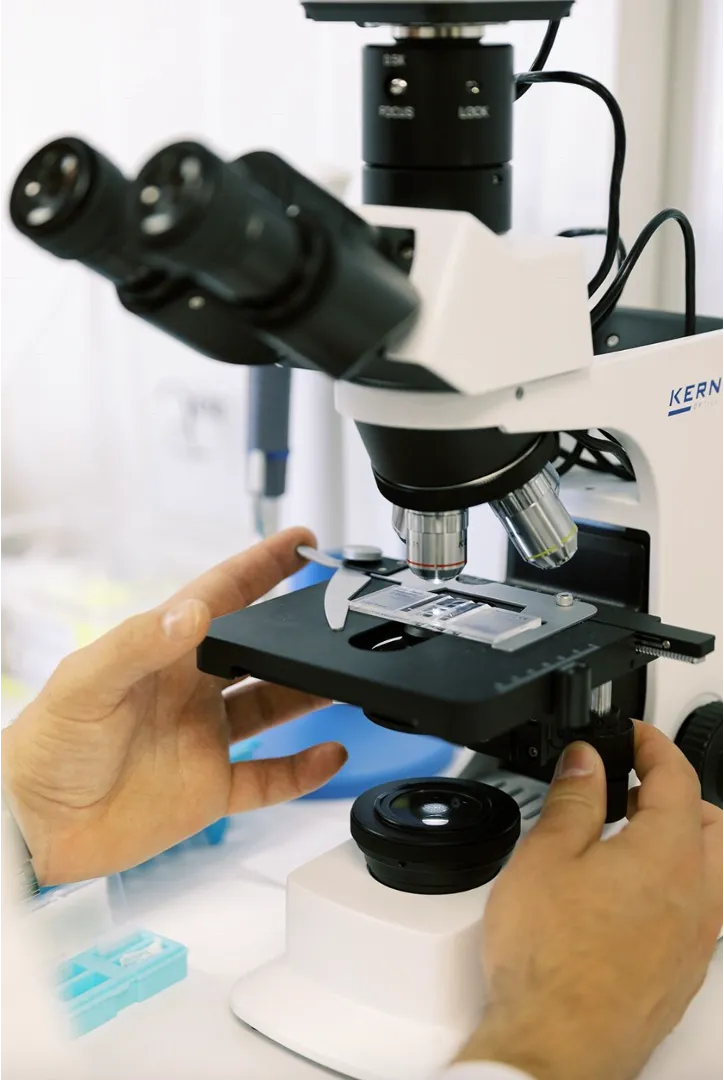
At our facility, scientists are constantly monitoring and testing the sun-drenched Nannochloropsis oceanica until they’re ready for harvest. The resulting green powder is packed with powerful properties due to the unique way it’s grown.
How we produce phytoplankton at Plankton First.
Let’s explore the five key elements of the Plankton First production method:
- We grow in natural pools, not bioreactors.
While phytoplankton can be cultivated in highly controlled, artificial bioreactors, we choose to grow ours in pools that mimic its wild conditions.
“We admire and cherish the complexity that is already in the natural form of the plankton. Instead of trying to hijack this, we decided to play along with nature,” Andreou says of this decision.
Phytoplankton has evolved over billions of years to become as resilient, efficient, and productive as it is today. Trying to control this highly complex organism can backfire.
For example, since phytoplankton uses light to conduct photosynthesis, you might assume that giving it more light would lead it to grow better. In reality, though, excess light (beyond what is naturally provided by the sun) can cause it to lose out on certain key nutrients.
“Phytoplankton are not isolated actors. They are part of a balanced, interdependent network—a system. In this system, nothing is missing and nothing is superfluous. Everything is in constant balance,” says Andreou.
The Plankton First model is about respecting this balance; engineering in a way that empowers nature and pays respect to the interdependencies of the environment.
- We co-create with the surrounding landscape.
Phytoplankton, even more than other organisms, is a reflection of its surrounding conditions: It’s shaped by the patterns of sunlight, wind, and rain where it grows. We chose to cultivate ours in Greece—a region with abundant sunlight, temperate conditions, and clear seawater—for this very reason, and it shows in the finished product. “This specific organism grows like this only in this place,” says Andreou.
- We maximize our resources.
We are lucky to receive plenty of sunlight at our production facility—sometimes even more than what our phytoplankton need to grow. Instead of wasting excess solar resources, we have come up with a way to make the most out of them, without tipping our surroundings out of balance.
When there is more sunlight than the phytoplankton can convert into usable energy, we capture the leftover light using semi-transparent solar panels that cover our ponds. We have the ability to save this light energy for times when the sun is not as abundant. In this way, our production methods mimic how phytoplankton itself lives: intentionally, prudently, and in tune with its surroundings.
- We work within strict Natura 2000 guidelines.
As Natura 2000-designated zone, our region of the Malian Gulf is a haven for migratory birds that stop in the area to rest and feed. In order to protect this crucial habitat, we must follow strict guidelines to ensure that our facility doesn’t interfere with the surrounding ecology.
While doing business in a protected region requires more permits, more paperwork, and more effort, we do it in order to ensure our impact on the land remains minimal.
“We need to do it in the most natural way possible, and we have the Natura to thank for that,” says Andreou.
- We are as flexible and adaptive as phytoplankton itself.
Phytoplankton are extremely versatile organisms that can rapidly adjust to various environmental conditions. This gives us the ability to change its nutritional profile simply by tweaking a few of the conditions in our ponds.
For example, we can produce phytoplankton biomass that is richer in the specific nutrients that pregnant women need, or that has a more favorable amino acid profile for athletes—without any sort of genetic modification.
How Plankton First production methods lead to a superior product.
These production practices lead to a single-ingredient phytoplankton product that is an expression of remote Greek coasts: clean, abundant, and totally singular.
NannOcea® aligns with consumer demand for clean, traceable, and sustainable nutrition. Certified vegan, halal/kosher, and ISO 9001 and 2200 compliant, it is in keeping with the highest standards of quality and food safety. And with an impressive array of complete plant protein, heart-healthy EPA omega-3s, antioxidants, polyphenols, and vitamins, it is a nutrient-dense ingredient that’s unmatched in its resource efficiency.
Phytoplankton is an abundant, renewable resource that requires only sunlight, trace nutrients, and CO2 to grow. In a food industry that is rampant with deforestation, extractive growing practices, and fossil fuel use, we need climate-responsive solutions like this now more than ever.
Join the wave.
Our production methods help us imagine a new type of climate-aware food industry and show what nutrition can look like when we let nature lead.
To support a movement that delivers nutritional benefits without compromising the future of our planet, connect with us to explore how NannOcea® could fuel your next innovation.