
Plankton First is a Swiss-owned biotech company focused on NannOcea®
We cultivate Nannochloropsis oceanica, one of the most nutrient-dense phytoplankton species. Through NannOcea®, our premium whole-food ingredient, we provide clean, traceable, and naturally rich sources of EPA omega-3, complete protein, antioxidants, and essential micronutrients for modern nutrition solutions.
.jpg)
Unlocking the Power of Phytoplankton
By harnessing the intelligence of phytoplankton — nature’s first food, first oxygen producer, and the base of the marine food chain — we aim to offer sustainable solutions that nourish people and support planetary health.Our mission is simple: to put nature’s most efficient organism at the centre of tomorrow’s nutrition.
Our Nature-Led Approach
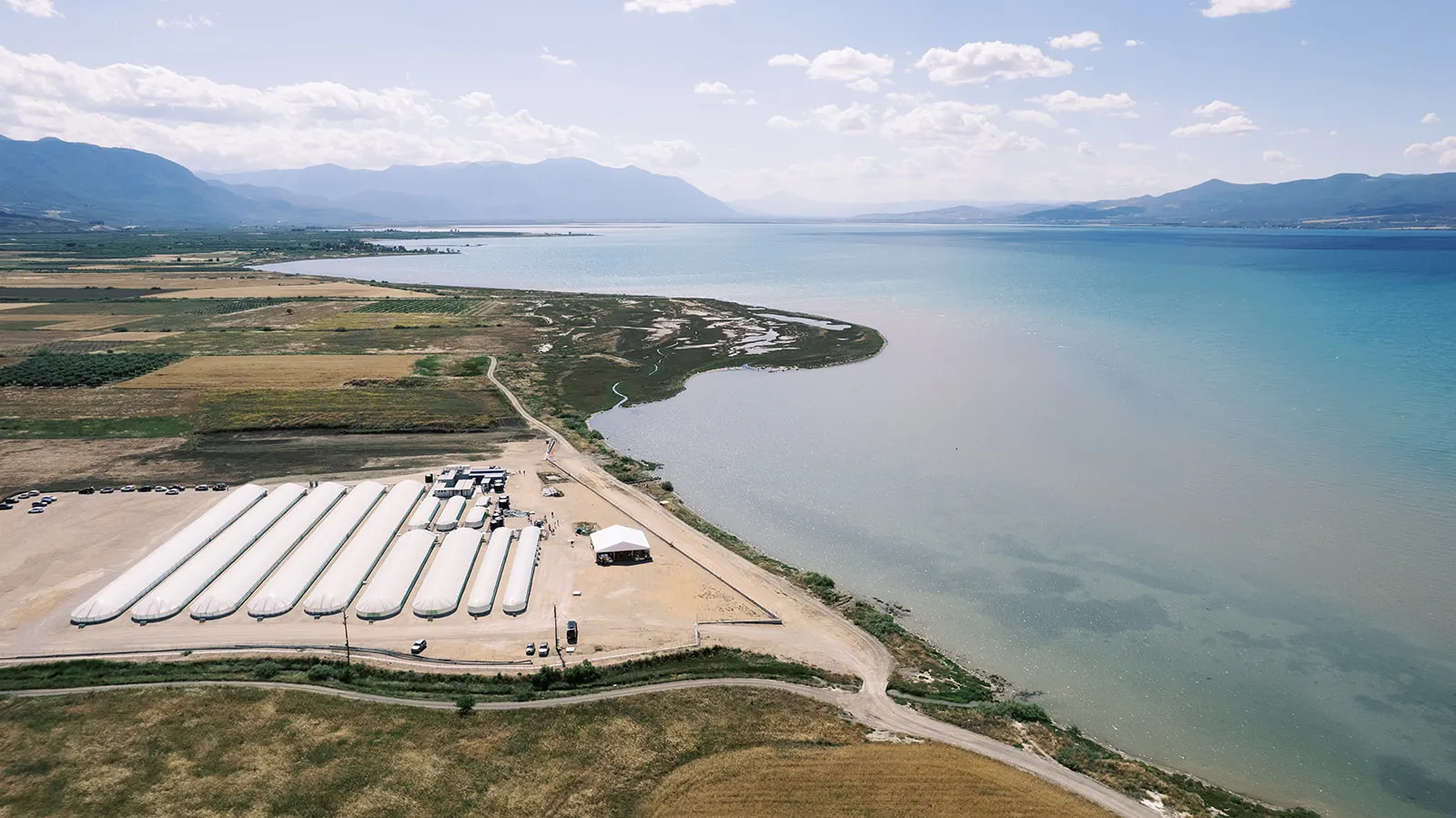
Our cultivation site in Greece was designed to work with nature, not against it — honouring the environment that has sustained phytoplankton since the origin of life.
Instead of artificial bioreactors, we grow Nannochloropsis in open-air ponds shaped by natural sunlight, seawater, and the rhythm of the surrounding environment.
This approach preserves the microalga’s intrinsic complexity, resulting in a clean, minimally processed ingredient with exceptional nutrient density and bioavailability. Learn more about our nature-led production approach.
They support Plankton First
At Plankton First, collaboration drives our science. We work with leading universities and research centres to deepen the understanding of phytoplankton. Together, we advance evidence-based innovation and bring nature-led, high-quality solutions to the future of nutrition and wellbeing.


.webp)

%20(1).webp)
%20(1).webp)
Your questions, our answers
Microalgae require very little land, use sunlight and CO₂ to grow, and can thrive in non-arable regions.
They naturally capture CO₂ and can integrate into circular water systems. Compared to traditional crops or fish-derived oils, algae offer significantly improved efficiency per hectare.
Microalgae deliver complete amino acid profiles, including BCAAs, and naturally contain antioxidants and micronutrients absent in many plant proteins.
They can enhance or partially replace proteins in supplements, bars, ready-to-drink formulations, pet food, or functional snacks.
We grow Nannochloropsis oceanica in outdoor ponds using sunlight, seawater, and CO₂. Biomass is harvested gently, dried immediately, and minimally processed under strict quality systems to preserve nutrients. Our site is located in a Natura 2000 protected area. To find out more you can click here.
Microalgae are the original source of marine omega-3s.
Producing EPA directly from algae avoids overfishing, improves purity, and reduces dependence on declining fish stocks.
It also enables consistent quality and a far smaller environmental footprint.
We produce in Greece — within a Natura 2000 protected area — because it offers the ideal natural conditions for Nannochloropsis.
Abundant sunlight, clean seawater, and stable humidity create an environment where our phytoplankton grows efficiently and reliably.
Because algae naturally capture CO₂, our cultivation supports environmental conservation while keeping our own footprint minimal.
Working within a protected landscape ensures that our production stays aligned with nature — safe, clean, and ecologically responsible.
Phytoplankton and microalgae are closely related, but not identical.
Microalgae is the broader term. It includes all microscopic algae capable of photosynthesis, living in freshwater or marine environments.
Phytoplankton is a subset of microalgae. It specifically refers to the photosynthetic microorganisms that float or drift in oceans and lakes and form the base of aquatic food webs.
If you’re interested in joining Plankton First and believe your skills can contribute to our mission, we’d be happy to hear from you.Please reach out via our contact form, and our team will get back to you. We look forward to meeting talented people who share our commitment to building a better future.